

🤝 This article is sponsored by Sandstone Galleries
Limited Edition Landscape Prints
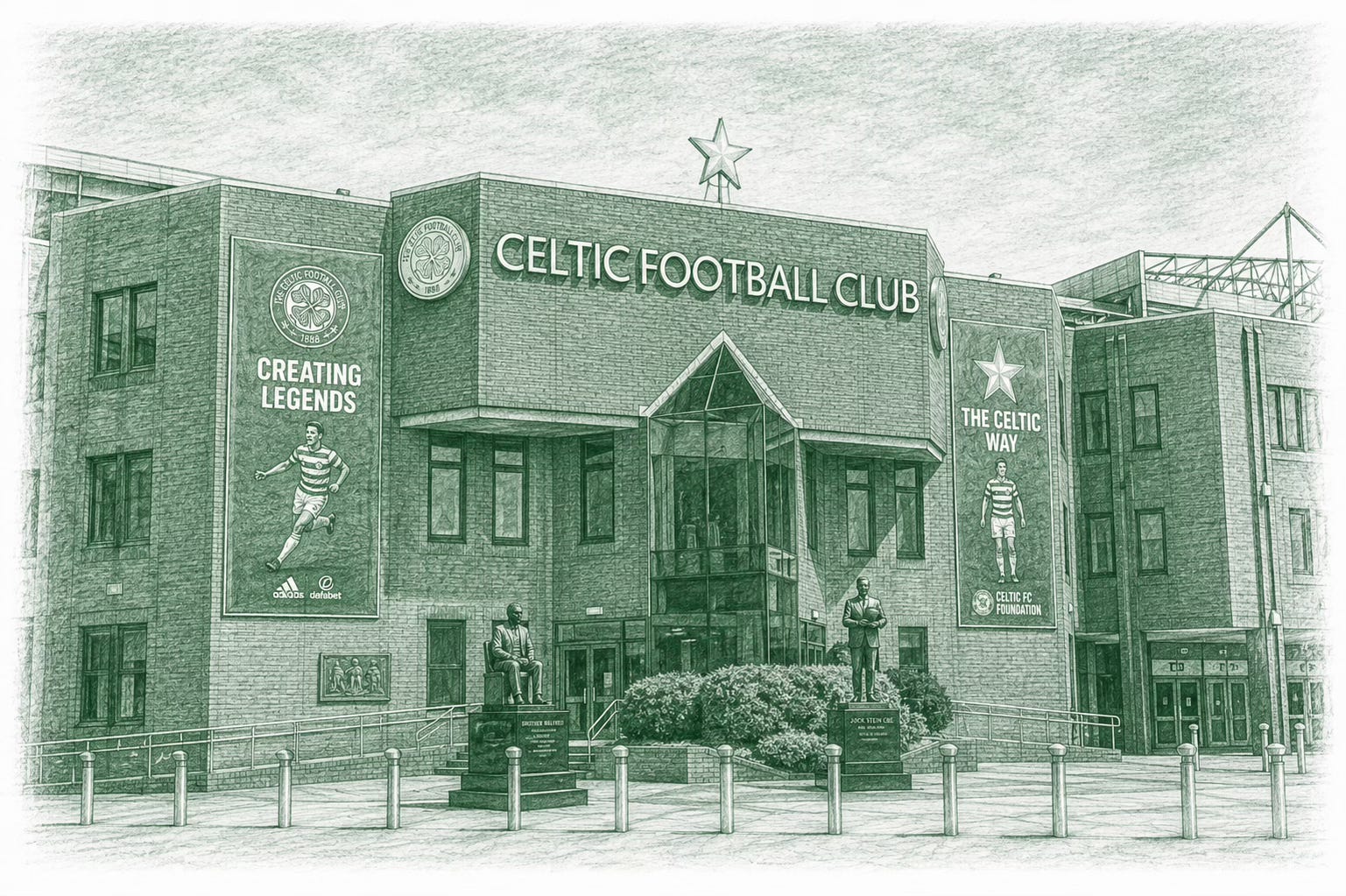
Celtic Football Club wasn’t born out of boardrooms, business plans, or branding exercises. It was born out of necessity with a belief in uniqueness and ability. In 1887, Brother Walfrid founded Celtic as a way to feed the poor of Glasgow’s East End; a community of Irish immigrants facing poverty, exclusion, and hardship. Football and sport were the vehicles, but compassion and expression of identity were the purposes.
That origin story is not a footnote; it’s the foundation, the bedrock of everything Celtic is and has become. It’s a mirror of who we are. From the beginning, Celtic was a beacon for people who needed a belonging. For the Irish diaspora in Scotland, the club became a cultural home, a place where identity could be celebrated rather than hidden. The colours, the songs, the symbols, the pride; these weren’t just football traditions, they were expressions of heritage. Celtic offered a way for a community to stand tall, to show its value, and to build something powerful together.
That spirit and belief shaped the club’s rise. Celtic supporters didn’t just follow our team; we built a movement. We turned football into a statement of unity, resilience, and ambition. Every victory carried meaning beyond the pitch. Every trophy was proof that a community once pushed to the margins could thrive, excel, and lead. Celtic’s success became a symbol of progress and a reminder that identity and achievement could grow from adversity. And succeed we did. Celtic are the most decorated and successful club in Scotland, a giant of the domestic game, and a name recognised across the football world. The Lisbon Lions, every one of them born within 30 miles of Celtic Park, remain the ultimate example of what made Celtic unique: local players, playing for a community club, conquering Europe with style, courage, and belief. That 1967 European Cup win wasn’t just a sporting triumph; it was a cultural milestone.
Today, Celtic’s identity is a blend of history, pride, charity, and relentless ambition. The club’s charitable roots still shape its values. Its cultural heritage still fuels its passion. Its success still inspires its supporters. And its global fanbase, millions strong, carries that identity into every corner of the world. Celtic’s traditions and values aren’t just nostalgic platitudes; these are the backbone of what makes the club unique. The charity of Brother Walfrid, the cultural pride of the Irish diaspora, the commitment to community, and the belief in football as a force for good are not relics of the past. All of these are living principles that continue to define Celtic’s identity today. Supporters carry these values forward not out of habit, but out of responsibility. We understand that Celtic’s soul is rooted in solidarity, humility, and purpose, all qualities that must be protected, renewed, and passed on. In a football world increasingly shaped by commercial interests, Celtic’s traditions act as a compass, reminding us all what the club stands for and why it matters. Charity gave Celtic its heart and identity gave it its soul.
That is precisely why supporters must keep a watchful eye on the corporate body that stewards the club. Celtic’s history shows that its greatest strength has always come from its people; the fans, the community, the culture, not from boardrooms. When commercial pressures rise, when branding overtakes belonging, or when decisions drift from the club’s founding principles, it is the supporters who must safeguard Celtic’s identity. A healthy tension between the board and the fanbase is not a problem; it is a necessity. It ensures that Celtic remains rooted in its values, guided by its origins, and accountable to the community that built it. Protecting Celtic’s traditions is not about resisting or restricting progress.
Instead, it is about ensuring that progress never comes at the cost of the Celtic soul. Celtic DNA exists to capture and contribute to all of this. It’s a platform built for supporters who understand that Celtic is more than a team. It’s a story. A community. A legacy. A feeling. Celtic DNA is where fans connect, debate, celebrate, and share the identity that has been passed down through generations. It’s a digital home for the spirit that has defined Celtic since 1887; the spirit of charity, pride, unity, and success.
This is Celtic. A club like no other. And this is Celtic DNA, the place where that identity lives, grows, challenges and continues.
All views expressed on Celtic DNA are personal opinions and are for commentary and discussion purposes only