

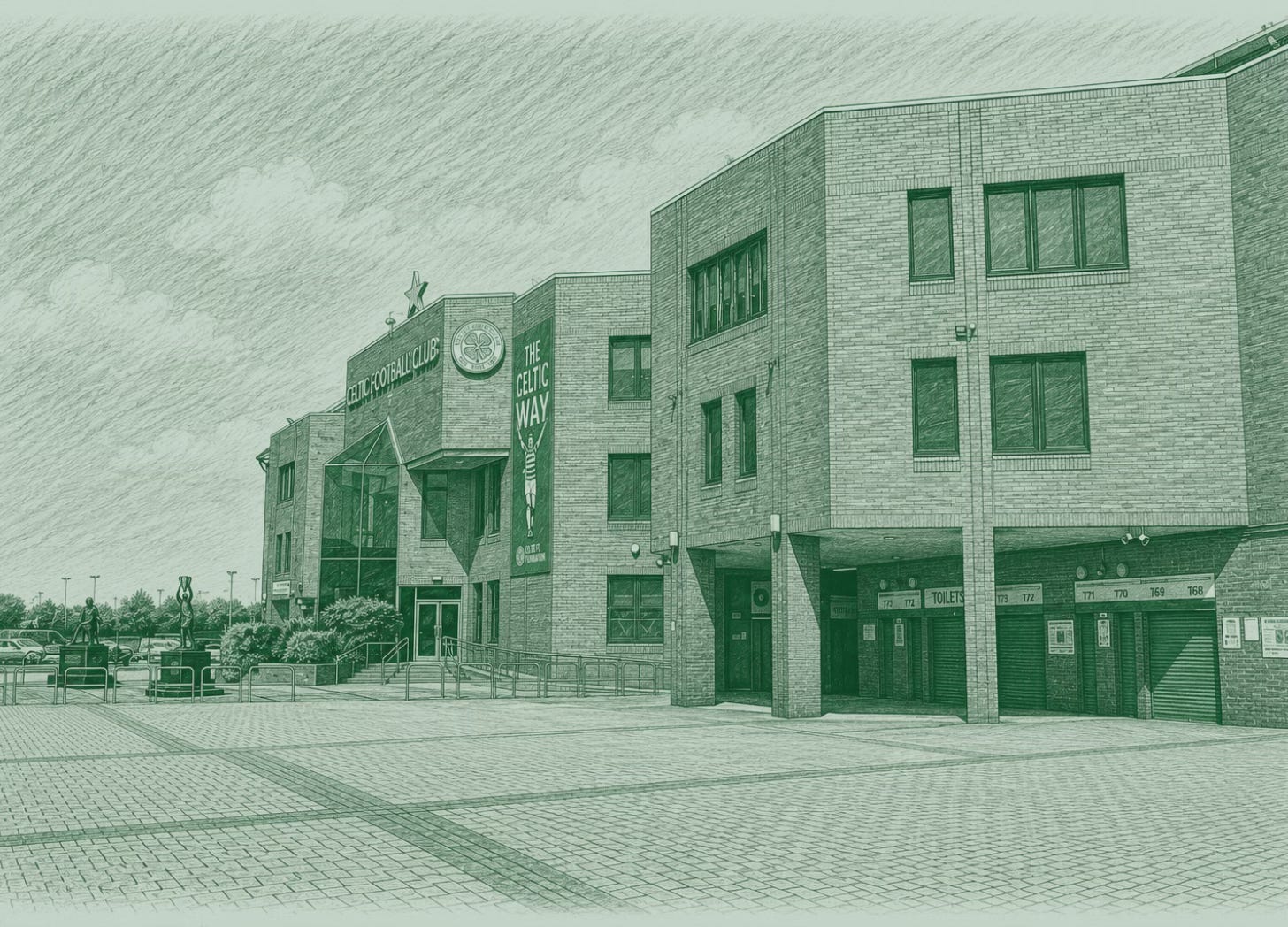
As we, the fans, know there is much more about Celtic than manager and player interviews, matches played, fan and pundit views and corporate accounting. To continue to be the club like no other, Celtic needs to be bigger, bolder and much more ambitious, but that doesn’t come without an openness to change.
Celtic supporters know these feelings all too well: the transfer window opens, rumours swirl and fade, hope flickers… and then the familiar pattern unfolds. A slow start. A scramble. A late loan. A panic buy. A sense that the club is reacting to events rather than shaping them. For a club with Celtic’s history, stature, and cultural expectations, this cycle isn’t just frustrating, it’s damaging to our reputation and values. And it’s happening because Celtic have slipped into a way of operating that belongs to another era.
This isn’t about one bad window or one misjudged signing. It’s about a structural failure to plan. It’s about a recruitment strategy that has become inconsistent, short-term, and overly cautious. It’s about a club that has allowed itself to drift into the footballing Middle Ages while the rest of the sport moves forward with modern thinking, integrated departments, and longterm planning.
If Celtic want to avoid failing in the longer term, they must first accept that their current approach is failing to plan.
A Pattern of Poor Recruitment Windows
Across recent seasons, Celtic’s recruitment windows have followed a troubling pattern. The club has:
Failed to replace key players quickly or adequately
Entered seasons with obvious gaps in the squad
Relied on late-window deals that feel rushed rather than strategic
Signed players who don’t fit the manager’s system or the club’s long-term needs
Allowed squad depth to erode through inaction
Supporters aren’t imagining this. The evidence is on the pitch. Celtic have gone into campaigns without a reliable left-back, without a physical striker, without a commanding centre-half, without midfield balance, without proper succession planning for ageing players, and without the kind of squad depth required for European competition.
These aren’t isolated mistakes. They are symptoms of a deeper issue: Celtic do not have a coherent, long-term recruitment strategy. They have a series of short-term reactions. When a club fails to plan, it inevitably ends up doing one of two things, delaying or making rushed decisions.
Celtic have done both. Inaction leaves the squad weaker, forces managers to improvise, and creates pressure that leads to rushed signings. Through panic buys, players are signed because they are available rather than because they are ideal and these rarely ever work out but they clog the wage bill, block pathways for better talent, and create instability in the squad.
Supporters feel this deeply because they know Celtic should be better. They know the club has the resources, the fanbase, and the platform to operate with ambition. Instead, they see a club that seems content to fish in a small pond, even when the ocean is right there in front of us.
A Footballing Middle Ages: Outdated Thinking and Structures
Modern football clubs operate with integrated departments: data analytics, scouting networks, sports science, succession planning, and long-term squad modelling. Recruitment is not a seasonal activity; it is a year-round process.
Celtic, however, often appear stuck in an older model:
Scouting that feels narrow rather than global
Decision-making that seems centralised rather than collaborative
A risk-averse culture that favours familiarity over innovation
A tendency to battle over the wrong things — penny-pinching instead of vision-building
This small-minded, ultra-safe mentality is not just frustrating; it is limiting. It creates a club that fears mistakes more than it seeks progress. It leads to structures that resist new ideas, new methods, and new voices. And crucially, it leads to a lack of ambition.
The Problem of Longevity Without Evolution
One of the most significant issues lies in the people making the decisions. Celtic have staff and directors who have been in their roles for decades. Longevity can be a strength but only when accompanied by evolution with footballing accountability. At Celtic, it has too often bred complacency, insularity, and a reluctance to embrace change.
When leadership becomes too comfortable, it stops listening. It stops adapting. It stops recognising the legitimate role of supporters in shaping the club’s direction. Fans are not customers; they are stakeholders. They are part of the fabric of the club. When their voices are dismissed, the club shrinks into itself.
This creates a culture where:
New ideas are viewed with suspicion
Innovation is seen as risk rather than opportunity
The club defaults to “the way we’ve always done it”
Ambition is replaced by caution
Celtic cannot afford this mindset. Not in modern football. Not with the expectations of their supporters. Not with the traditions they claim to uphold.
What Celtic Must Do: Build a Long-Term Strategy
If Celtic want to break the cycle, they must commit to a long-term recruitment strategy that includes:
Succession planning for every position
A clear profile of the type of player the club wants
Integrated scouting and data analysis
A global recruitment network
A willingness to invest early rather than react late
A structure that empowers modern football thinking
A leadership team that evolves, refreshes, and listens
This isn’t radical. It’s standard practice for ambitious clubs across Europe. Celtic should be leading Scottish football in this area, not lagging behind it.
Why This Matters: Celtic’s Traditions Demand Better
Celtic were founded on ambition, innovation, and a desire to advance a cause. The club’s history is built on progress; sporting, social, and cultural. From Brother Walfrid’s vision to the Lisbon Lions’ triumph, Celtic have always been at their best when they think boldly and act with purpose.
Failing to plan is planning to fail. And failure is not part of Celtic’s identity.
Supporters demand progress not because they are impatient, but because they understand the club’s values. Celtic are meant to strive, to grow, to push forward. That requires planning. It requires vision. It requires leadership that embraces modern football rather than fearing it.
Celtic’s traditions call for more than caution and balancing the books. They call for courage.
If the club can rediscover that courage, in recruitment, in strategy, in ambition then the future can be bright again. But if they continue with the same outdated thinking, the same small pond mentality, and the same reluctance to evolve, then supporters will continue to suffer the consequences.
Celtic’s story has always been one of combating adversity and making progress. We are custodians of that history and that cause. It’s time for the club to start adding to that legacy with a determination to be the best, not only in Scotland but in Europe too.
All views expressed on Celtic DNA are personal opinions and are for commentary and discussion purposes only
🔗 Missed this article?
Why Celtic’s interest in this transfer target is worrying.

This article is sponsored by Sandstone Galleries